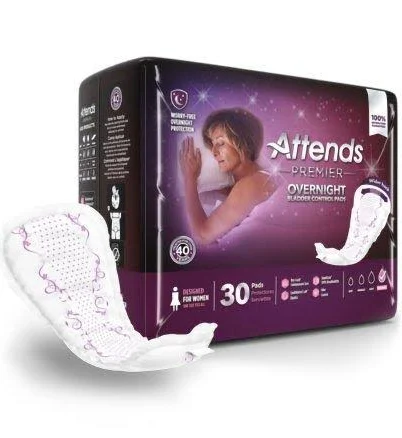
Attends · Incontinence Pads & Protection
Attends Premier Overnight Bladder Control Pads
Avoid; waterproof pads typically contain PFAS; unverified.
Attends provides zero PFAS information for this overnight pad. Waterproof incontinence pads typically use fluorinated coatings, and no third-party verification exists.
The better-graded swap
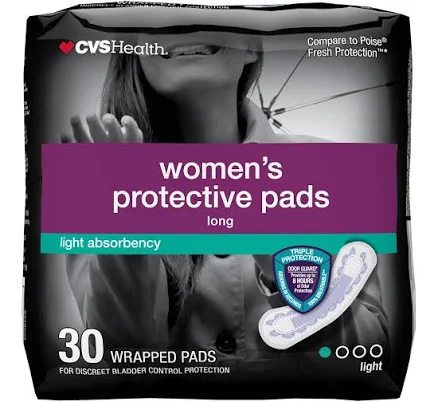
CVS Health
CVS Women's Protective Pads Moderate Absorbency
70/100 safety
Same rubric that flunked this product. The swap earned Good.
Still want this one anyway? Check the price on Amazon. We’d swap it.
Material
cellulose core, synthetic polymer layers, adhesive, waterproof backing
Brand disclosure
Brand is silent on PFAS
Lab data
No public lab test
What Attends Premier Overnight Bladder Control is made of, ingredients and materials
Attends Premier Overnight pads use a cellulose absorbent core (wood pulp), synthetic polymer top and bottom layers, pressure-sensitive adhesive, and a waterproof backing. The cellulose core itself poses minimal chemical risk, but the synthetic polymer layers and waterproof backing are where concern arises, waterproof barriers in period and incontinence products frequently rely on fluorinated compounds (PFAS) or other polymeric coatings to repel moisture. Attends has not publicly disclosed whether their waterproof layer contains PFAS or alternatives, leaving this a significant unknown.
What’s concerning
Category baseline
The starting point for this type of product, before anything specific to this product is counted.
No PFAS disclosure
No public statement from the brand about PFAS in this product.
Waterproof / stain-resistant treatment
Water-repellent coating treatments have historically used PFAS.
PFAS
Attends has not disclosed waterproofing chemistry. Waterproof pads in this category commonly use PFAS or other fluorinated compounds; absence of transparency is a red flag but not proof of presence.
Source, ATSDR ↗Adhesive contact dermatitis (acrylate or silicone-based)
Pressure-sensitive adhesives in incontinence and period pads are documented to cause localized skin reactions in sensitive individuals. Attends does not specify adhesive type publicly. Symptoms include rash, itching, or irritation at contact sites.
Synthetic polymer degradation and leachate release
Polyethylene, polypropylene, and polyester layers can degrade under heat, friction, or extended wear, potentially releasing oligomers or residual monomers. No specific data on Attends Premier Overnight; risk is material-class dependent.
Bacterial and fungal overgrowth from prolonged moisture retention
All occlusive pads create a warm, moist microenvironment. Extended wear (e.g., overnight use without changing) increases risk of secondary infection, urinary tract infection, or yeast proliferation, especially in individuals with compromised skin barriers.
What’s reassuring
Chlorine or bleach residues in cellulose pulp
Cellulose cores are typically bleached during manufacture. Attends does not disclose bleaching methods or residue limits. Industry standards generally control this, but transparency is absent.
The full breakdown
The brand's record and disclosure
Attends (Essity) has not published transparency reports on PFAS use in their incontinence or feminine-care lines. The company does not list third-party certifications (e.g., OEKO-TEX, Cradle to Cradle) on Premier Overnight packaging or marketing materials, which limits independent verification of chemical safety. No formal recalls or regulatory actions against Attends incontinence pads for chemical contaminants are on public record, but silence on PFAS composition is notable given the prevalence of fluorinated polymers in waterproof menstrual and incontinence products.
How it compares in its category
Most mainstream incontinence and overnight pads (Depend, Always Infinity, Kotex) use similar cellulose-synthetic layer construction and are similarly opaque about waterproofing chemistry. Attends Premier Overnight is mid-to-premium tier in absorbency and positioning. Brands explicitly avoiding PFAS (e.g., Rael, Cora, some Seventh Generation lines) are rare in the overnight/heavy-flow segment and typically cost more. For this category, Attends is representative of the market norm rather than a leader or laggard in disclosed safety.
If you buy it
Change pads every 4-8 hours or after bowel movements to minimize skin contact time and bacterial growth risk. Avoid prolonged heat exposure (do not leave pads in direct sunlight or near heat sources, as this may degrade synthetic layers and increase leachate risk). If skin irritation, rash, or odor develops, discontinue use and rinse skin thoroughly; sensitivity may signal adhesive or synthetic layer reactivity. Store in cool, dry conditions to preserve barrier integrity.
What we don’t know
- Basis
- Model estimate, 35% confidence, not a lab result
- Lab test
- None on record for this exact product
- Brand statement
- Attends has made none
Formulations change between production runs, so check the current label. How we grade.
Better-graded alternatives in Incontinence Pads & Protection
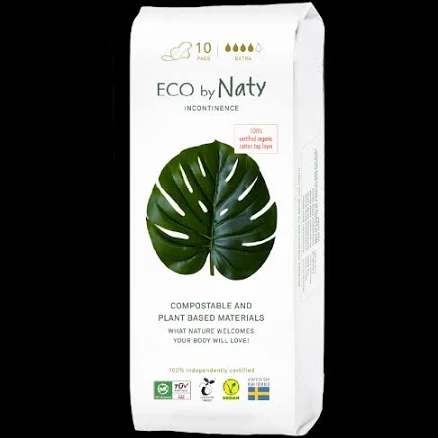
Eco By Naty
Incontinence Pads
- Bamboo-derived viscose, cotton, plant-based absorbent core
- We found no PFAS statement from the brand
- Heavy metals
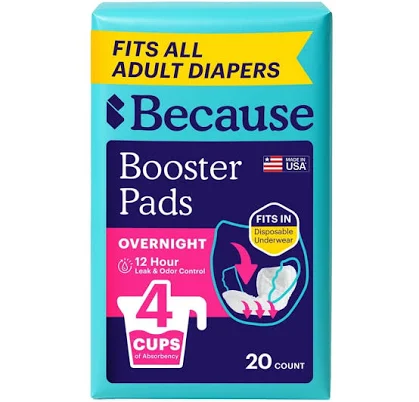
Because Market
Because Booster Pads
- Cellulose, superabsorbent polymer, cotton blend
- We found no PFAS statement from the brand
- Absorbent material degradation and bacterial growth
2 hazards checked on this product. See all of them.
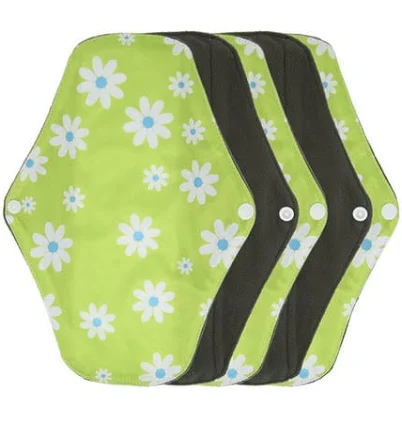
5pcs Bamboo Charcoal Washable Incontinence Pads
- bamboo charcoal textile, washable cotton-blend absorbent layer
- We found no PFAS statement from the brand
- Azo dyes and synthetic colorants
4 hazards checked on this product. See all of them.
More incontinence pads & protection grades
How we score, every product runs through the same public 0-100 rubric based on materials, coatings, brand disclosure, lab findings, and recalls. See the full methodology → Spotted a mistake? Report an error.