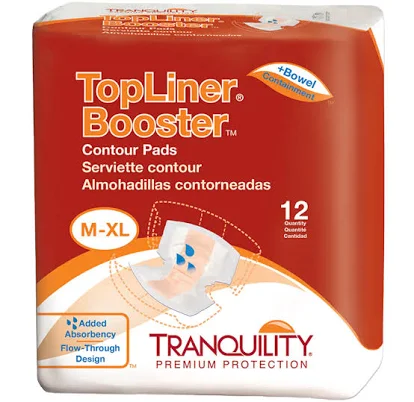
Tranquility · Incontinence Pads & Protection
Tranquility Booster Pad Contour
Skip until brand discloses waterproof treatment chemistry or test results.
Tranquility Booster Pad Contour is a period pad with a waterproof backing typical of the category, a known route for PFAS use in textile water-resistant treatments. Brand makes no public PFAS disclosure or chemical statement.
The better-graded swap
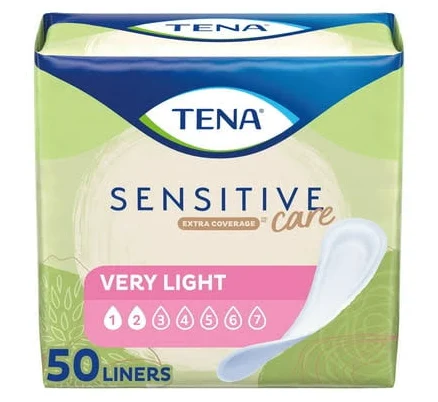
Tena
TENA Very Light
70/100 safety
Same rubric that flunked this product. The swap earned Good.
Still want this one anyway? Check the price on Amazon. We’d swap it.
Material
absorbent core with waterproof backing (composition unspecified)
Brand disclosure
Brand is silent on PFAS
Lab data
No public lab test
What Tranquility Booster Pad Contour is made of, ingredients and materials
Tranquility Booster Pad Contour uses an absorbent core (likely superabsorbent polymer/SAP mixed with cellulose) bonded to a waterproof backing layer. The backing material composition is not publicly disclosed by the brand. Waterproof layers in incontinence products are typically treated with fluorochemical PFAS coatings or polyurethane/polyester films; without Tranquility's specification, the treatment chemistry cannot be verified. This opacity is the primary safety concern for this product.
What’s concerning
Category baseline
The starting point for this type of product, before anything specific to this product is counted.
No PFAS disclosure
No public statement from the brand about PFAS in this product.
Waterproof / stain-resistant treatment
Water-repellent coating treatments have historically used PFAS.
PFAS
Waterproof layer chemistry unspecified by brand; fluorochemical PFAS coatings are standard in incontinence pad backings to repel moisture. Graded separately as Poor (25/100), but this is the dominant safety concern for this product.
Source, ATSDR ↗Superabsorbent polymer (SAP) skin contact and irritation
SAP-based absorbent cores can cause localized irritation or allergic contact dermatitis in sensitive users if the core material contacts skin directly. Tranquility pads include a layer barrier, but degradation or breach could expose skin to raw SAP particles.
Unspecified adhesives and bonding agents
Absorbent core bonded to backing; adhesive chemistry not disclosed. Acrylate or synthetic resins may off-gas or migrate onto skin during prolonged contact, though no incidents are documented for this brand.
Microplastic shedding from synthetic layers
Polyester or polyurethane backing and top sheets can shed microfibers or microplastic particles with wear, especially if the product is compressed or friction-loaded during use. Environmental and potential ingestion risk if particles contact mouth or eyes.
What’s reassuring
Heavy metals
Incontinence pads are not typically pigmented; bleaching agents used in cellulose pulp are regulated. No contamination is documented for Tranquility products, but full material traceability is not public.
Source, FDA ↗The full breakdown
The brand's record and disclosure
Tranquility (Aeroflow Health division, formerly SCA) does not publicly disclose waterproof treatment chemistry or provide third-party test results for PFAS or other fluorochemicals in its pad lines. The brand has not published sustainability reports addressing PFAS phase-out timelines or material sourcing. No major recalls or safety controversies are on record for this specific product, but the absence of transparency is notable in a category where PFAS use is industry-standard and increasingly scrutinized.
How it compares in its category
Most incontinence pads in this category rely on PFAS-treated backings for water repellency; Tranquility is typical in this regard. Some competitors (e.g., Medline, Attends) have begun publishing PFAS reduction commitments or alternatives. Tranquility's contoured design offers ergonomic fit advantages, but material transparency lags behind leading brands adopting disclosure or PFAS-free backing materials. Without chemistry confirmation, it ranks mid-tier on safety profile.
If you buy it
Store pads in a cool, dry place away from heat sources; heat can increase leaching from undisclosed polymer backings. Replace pads promptly after use to minimize skin contact duration with the waterproof layer. If skin irritation develops, discontinue and contact a healthcare provider. Request a materials safety data sheet (MSDS) or contact the brand directly to ask about waterproof coating chemistry; consumer pressure for disclosure can drive industry change.
What we don’t know
- Basis
- Model estimate, 45% confidence, not a lab result
- Lab test
- None on record for this exact product
- Brand statement
- Tranquility has made none
Formulations change between production runs, so check the current label. How we grade.
Better-graded alternatives in Incontinence Pads & Protection
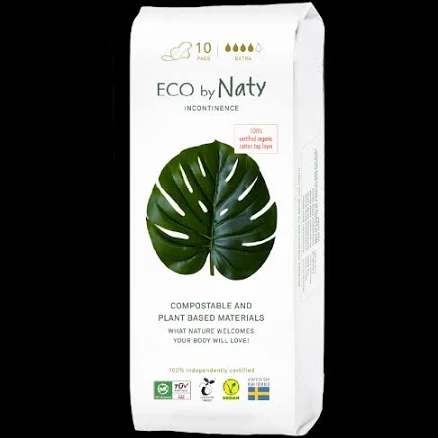
Eco By Naty
Incontinence Pads
- Bamboo-derived viscose, cotton, plant-based absorbent core
- We found no PFAS statement from the brand
- Heavy metals
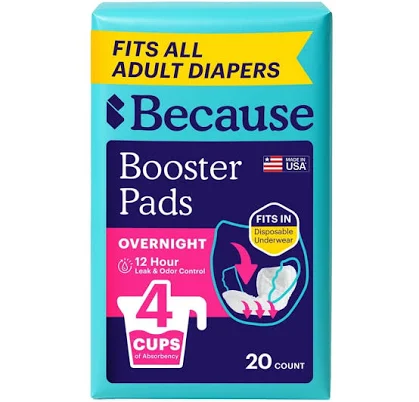
Because Market
Because Booster Pads
- Cellulose, superabsorbent polymer, cotton blend
- We found no PFAS statement from the brand
- Absorbent material degradation and bacterial growth
2 hazards checked on this product. See all of them.
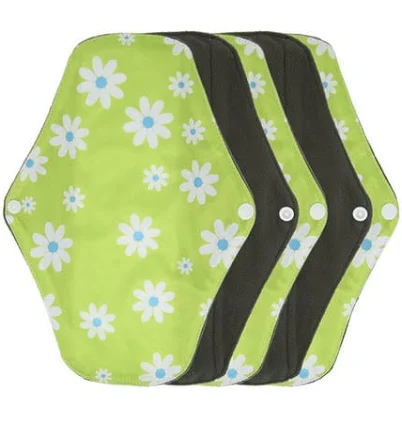
5pcs Bamboo Charcoal Washable Incontinence Pads
- bamboo charcoal textile, washable cotton-blend absorbent layer
- We found no PFAS statement from the brand
- Azo dyes and synthetic colorants
4 hazards checked on this product. See all of them.
More incontinence pads & protection grades
How we score, every product runs through the same public 0-100 rubric based on materials, coatings, brand disclosure, lab findings, and recalls. See the full methodology → Spotted a mistake? Report an error.