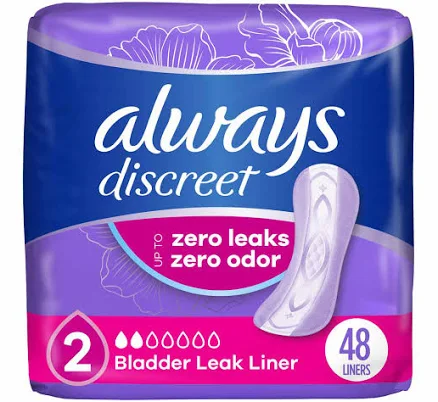
Always Discreet · Incontinence Pads & Protection
Always Discreet Incontinence Liners
High risk; skip until composition disclosed, absorbent incontinence products commonly contain PFAS-treated waterproof coatings.
Always Discreet does not disclose the chemical composition of its waterproof backing, a known PFAS vector in absorbent hygiene products. No third-party testing or PFAS-free claim exists.
The better-graded swap
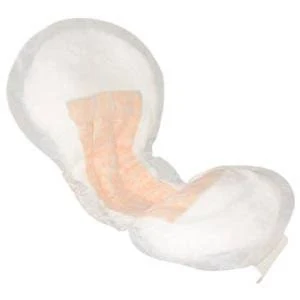
Tranquility
Tranquility Personal Care Pads 13.5" x 6.5", 96/Case
70/100 safety
Same rubric that flunked this product. The swap earned Good.
Still want this one anyway? Check the price on Amazon. We’d swap it.
Material
nonwoven fibrous core with waterproof backing layer (unspecified coating)
Brand disclosure
Brand is silent on PFAS
Lab data
No public lab test
You may also be interested in
Top-graded picks in the categories readers replace first, every one scored on the same rubric.

- polypropylene filter housing, carbon/sediment cartridge
- We found no PFAS statement from the brand
- Bacterial growth in spent cartridges
3 hazards checked on this product, all on its full breakdown.

Aquasure
Premier Series 75 GPD Under Sink Reverse Osmosis Water Filtration System
- RO membrane, carbon filters, stainless steel housing
- We found no PFAS statement from the brand
- Bacterial and microbial growth in housing and filters
4 hazards checked on this product, all on its full breakdown.

Avocado
Vegan Mattress
- organic cotton, natural latex, coconut coir, recycled steel coils
- The brand calls it PFAS-free, which we have not verified
- Heavy metals
2 hazards checked on this product, all on its full breakdown.
What Always Discreet Incontinence Liners is made of, ingredients and materials
Always Discreet Liners use a nonwoven fibrous absorbent core (likely polypropylene or cellulose blend) bonded to an unspecified waterproof backing layer. The backing chemistry is the critical unknown, waterproof coatings in incontinence products are routinely treated with PFAS compounds to achieve liquid repellency and durability. Procter & Gamble (Always' parent) does not publicly disclose whether this backing contains PFAS, Teflon-family coating, or alternative water-resistant polymers, making risk assessment incomplete.
What’s concerning
Category baseline
The starting point for this type of product, before anything specific to this product is counted.
No PFAS disclosure
No public statement from the brand about PFAS in this product.
Waterproof / stain-resistant treatment
Water-repellent coating treatments have historically used PFAS.
PFAS
Waterproof layers in incontinence pads are commonly PFAS-treated; Always Discreet does not disclose backing composition. Given the product category and lack of transparency, PFAS presence is statistically probable but not confirmed by the brand.
Source, ATSDR ↗Adhesive or bonding agent residues
Nonwoven core-to-backing adhesives may release low levels of volatile organic compounds or uncrosslinked oligomers during manufacturing or storage. No testing data publicly available for Always Discreet specifically.
Skin irritation from synthetic polymers or additives
Incontinence pad wearers occasionally report contact dermatitis or urogenital irritation; causation is not definitively attributed to Always Discreet composition, but repeated direct contact with synthetic nonwoven and polymer coatings can trigger sensitivity in susceptible users.
Microplastics
Prolonged moisture exposure or wear can fragment synthetic nonwoven fibers into microparticles. Vaginal absorption of microplastics is not well-studied; risk remains speculative but plausible given direct mucosal contact.
Source, EPA ↗What’s reassuring
Off-gassing from polymer degradation during storage
No recalls or complaints on record for volatile off-gassing from Always Discreet packages. Risk is low under normal room-temperature storage but increases in heat or humidity.
How is this PFAS grade calculated?
The brand's record and disclosure
Procter & Gamble has not voluntarily disclosed PFAS use in Always Discreet products despite increasing industry pressure and state-level PFAS regulations on absorbent hygiene products. The company has faced scrutiny over PFAS in other product lines but maintains minimal transparency on incontinence pad composition. No third-party certifications (e.g., GOTS, Cradle to Cradle) appear on Always Discreet packaging, limiting independent verification of materials.
How it compares in its category
Always Discreet sits in the mainstream mass-market segment; most competing incontinence pads (Depend, Tena, Poise) similarly withhold detailed coating specifications. Some niche brands (e.g., Lil-Lets, Natracare) market PFAS-free or certified-organic options, though availability is limited. The broader category suffers from industry-wide opacity on waterproof backing chemistry, making Always Discreet neither uniquely transparent nor uniquely risky by category standards, but all remain under suspicion pending disclosure.
If you buy it
Use the shortest absorbency level suitable for your needs to minimize skin contact duration and product waste. Replace liners every 3-4 hours or immediately after use; prolonged wear increases dermal and vaginal exposure to any coating chemicals. Do not flush liners; dispose in regular trash. Avoid storing in hot or humid environments (e.g., warm bathrooms) where polymer degradation or off-gassing could occur.
What is not known about PFAS in this product?
- Basis
- Model estimate, 35% confidence, not a lab result
- Lab test
- None on record for this exact product
- Brand statement
- Always Discreet has made none
Formulations change between production runs, so check the current label. How we grade.
What are the PFAS-free alternatives to Always Discreet Incontinence Liners?
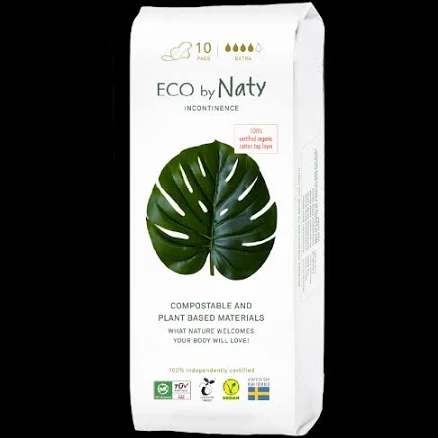
- Bamboo-derived viscose, cotton, plant-based absorbent core
- We found no PFAS statement from the brand
- Heavy metals
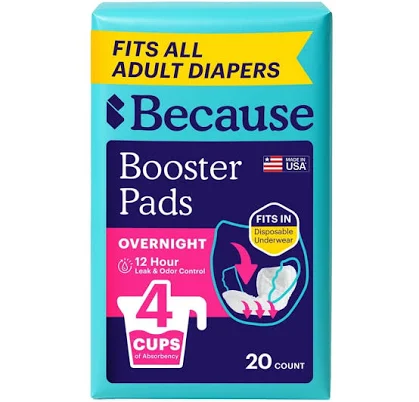
- Cellulose, superabsorbent polymer, cotton blend
- We found no PFAS statement from the brand
- Absorbent material degradation and bacterial growth
2 hazards checked on this product, all on its full breakdown.
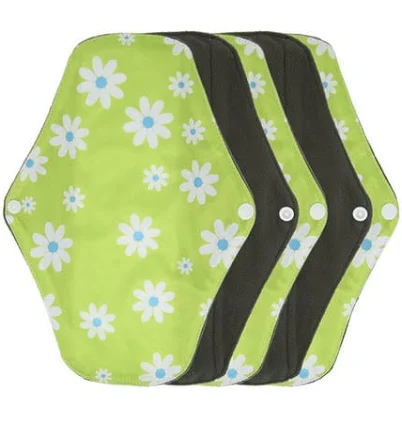
5pcs Bamboo Charcoal Washable Incontinence Pads
- bamboo charcoal textile, washable cotton-blend absorbent layer
- We found no PFAS statement from the brand
- Azo dyes and synthetic colorants
4 hazards checked on this product, all on its full breakdown.
More incontinence pads & protection grades
How we score, every product runs through the same public 0-100 rubric based on materials, coatings, brand disclosure, lab findings, and recalls. See the full methodology → Spotted a mistake? Report an error.